The UK government has confirmed that the National Minimum Wage and National Living Wage rates will go up significantly on April 1, 2026. The Low Pay Commission’s (LPC) recommendations were fully accepted, and this decision is meant to make sure that the lowest-paid workers can keep up with the rising cost of living and the median wage growth. Millions of workers in the UK need this pay raise.April 2026 will see new national living wage rates.
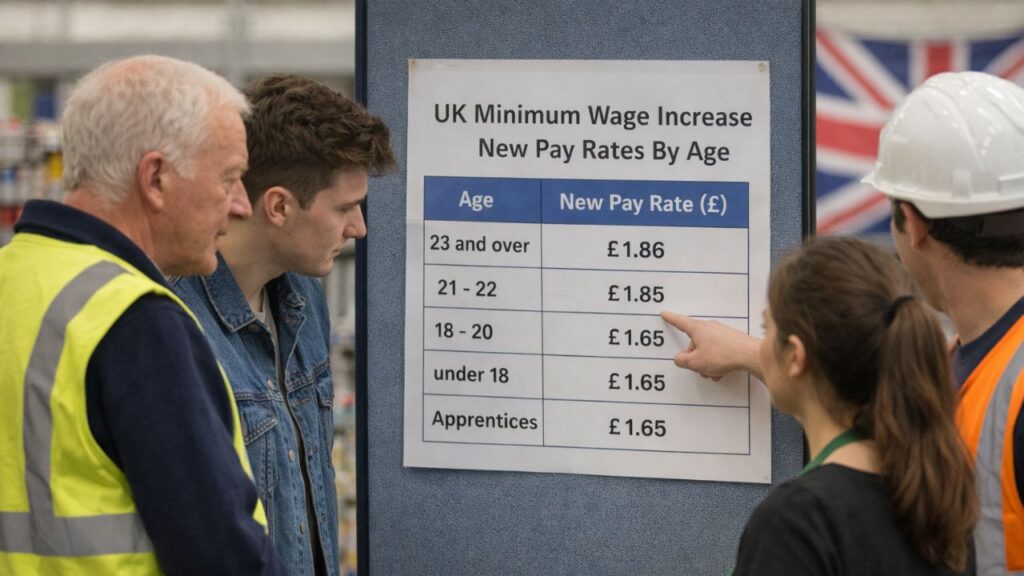
The biggest change in the wage increase is that workers 21 and older are now eligible for the National Living Wage (NLW). The NLW will go up from £12.21 to £12.71 per hour starting in April 2026. This is a 50p per hour (4.1%) increase. This change will give a full-time worker who works 37.5 hours a week about £975 more a year before taxes. Even though it’s the second-smallest percentage rise since 2016, it still shows a positive change.
Did you miss your DWP bonus in March 2026? Here are the things you can do next:
The biggest change for 2026 is the big rise for younger workers. The minimum wage for people between the ages of 18 and 20 will go up from £10.00 to £10.85 per hour. This is an 8.5% increase and an 85p per hour raise. The goal of this raise is to bring youth wages more in line with the adult NLW. A full-time job for a young person could bring in an extra £1,600 a year before taxes. The government is still working toward a unified wage structure in the future.

What This Week’s Update Means for PIP and ADP Claimants: The Motability Scheme Officially Changes
Workers aged 16 to 17 and those on apprenticeships will also get a fair pay raise. Their hourly wage will go up by 6%, from £7.55 to £8.00. This makes sure that younger people who are just starting to work or are in training don’t fall behind. Importantly, apprentices who are 19 years old or older and have finished their first year will be able to earn the full NLW of £12.71 per hour starting in April 2026.
Why the Minimum Wage Increases in 2026 Are Important
The LPC’s suggestions were based on a thorough study of the UK job market and expected inflation trends. Even though wages have gone up more than expected, many low-paid workers are still having trouble making ends meet. The 2026 increases are meant to find a balance between what workers need and what businesses can afford. Businesses are already dealing with higher National Insurance and pension costs.
Effects on the Retail and Hospitality Industries
Some industries, like retail, hospitality, and social care, that hire a lot of people at or near minimum wage will be affected more than others. Business owners in these fields, especially those who hire younger people, will have to pay a lot more, especially the 8.5% increase for 18-20-year-olds. Experts have said that “pay compression” is a risk. This is when the pay gap between entry-level workers and supervisors gets smaller, which could cause problems with compliance.
Fair Work Agency and Enforcement of Compliance
In April 2026, the government will start the Fair Work Agency (FWA), which will make sure that workers’ rights are protected, such as the National Minimum Wage, Statutory Sick Pay, and holiday pay. If an employer doesn’t pay the legal minimum, they could be fined up to 200% of the amount owed and have their name made public by HMRC. To avoid these penalties, it is very important to follow these new rates.
Confirmation in March Gives Legal Certainty
Businesses can be sure that they will be able to update their payroll systems in time for the new financial year, which starts on April 6, thanks to the March 2026 confirmation of the minimum wage rates. This rise is very important for many councils and local government bodies because it could go above current pay scales, which would mean they would have to make changes right away to stay in compliance.

UK Government Says YES: All UK Women Can Get a Free Bus Pass Under Viral Claim
The National Living Wage and the Real Living Wage
It is important to know the difference between the National Living Wage (NLW) and the voluntary real Living Wage. The Living Wage Foundation sets the real Living Wage based on the cost of living, while the NLW is the minimum wage that is required by law. The real Living Wage will go up to £13.45 across the UK and £14.80 in London by 2026. However, the government-mandated NLW will stay at £12.71 per hour.
What the Wage Increase Means for Your Take-Home Pay
The NLW’s rise from £12.21 to £12.71 may not seem like much, but for families with multiple members on minimum wage, the total effect can be big. These raises are meant to give low-income workers more money, but critics say that the 4.1% increase may not be enough to cover the higher costs of basic needs like rent and energy bills.
Getting ready for the change in April
In April 2026, workers need to check their pay stubs to make sure that the new rates are being used correctly. You can complain to your boss or call ACAS for advice if you are paid less than the legal minimum. Employers need to check the pay of all employees, especially those who are paid by the hour and might not make enough money if they work extra hours.
Looking forward to 2027 and 2028
The pay raises in 2026 are part of a longer-term plan to keep the National Living Wage in line with changes in the economy. The LPC has already said that the NLW age limit could be lowered to 20 in 2027. The goal is to have a single rate for all workers over the age of 18 by the end of the decade. In the next few years, this could mean even more pay raises for younger workers.
A look at the minimum wage situation in 2026
The National Living Wage will go up to £12.71 in April 2026. There will be big raises for workers aged 18 to 20. These changes are very important for workers who don’t make much money, especially in fields like retail and hospitality. However, the effect on businesses and the risk of pay compression are still major problems. These changes show that the government is trying to make sure that workers are paid fairly, but there will be arguments about whether they go far enough to keep up with rising living costs until 2026.