UK train passengers who use railcards will soon encounter stricter checks as part of new rules expected to begin from July 2026. These changes are being introduced to reduce misuse of discounted tickets and could save the Department for Transport (DfT) around £20 million annually.
Why the New Rule Is Being Introduced
Railcards provide discounted fares to various groups of passengers, but the DfT has identified widespread misuse. Many travellers reportedly purchase discounted tickets without actually holding a valid railcard, leading to significant revenue losses.
To address this issue, authorities are rolling out additional verification steps to ensure only eligible passengers benefit from these discounts.

How the Verification Process Will Work
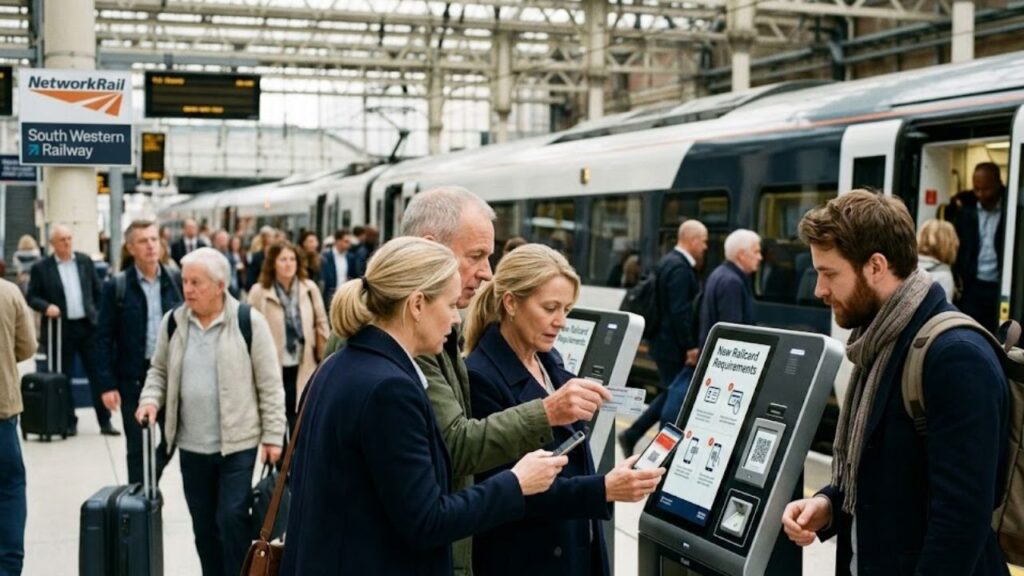
Under the new system, passengers buying tickets with a railcard will need to confirm their eligibility:
– At ticket machines: travellers may be required to scan their railcard or enter details such as their name or railcard number.
– Online or app purchases: users will only need to verify their railcard once, as the information will be stored for future bookings.
Changes to Ticket Refund Rules
Alongside railcard verification, the DfT is also tightening refund policies to prevent misuse. Currently, passengers can request refunds on unused tickets within 28 days without explanation.
However, new rules will limit refunds for Off-Peak and Anytime tickets to before 11:59 PM on the day prior to travel, unless there is a service disruption. Exceptions may still be considered in special or unavoidable circumstances.
The government estimates that refund abuse costs the rail system up to £40 million each year.

Improved Compensation Process for Delays
In a positive move for passengers, the DfT is also working to simplify compensation claims. Under the updated system, travellers will be able to claim refunds for delays directly through the retailer they purchased tickets from, instead of contacting train operators separately.
This aims to reduce the current issue where over £80 million in compensation goes unclaimed annually due to complicated processes.
Future Plans Under Great British Railways
These changes will be implemented under the upcoming Great British Railways (GBR), a new public body set to oversee the rail network.
Transport Secretary Heidi Alexander stated that the reforms will make rail travel more efficient and reliable. She emphasized that the goal is to ensure passengers receive compensation easily while preventing revenue losses caused by fraud and misuse.
The savings generated from these measures are expected to be reinvested into improving services, maintaining fare stability, and upgrading railway infrastructure.